Damien Hirst—Terror and the Sublime—“The Physical Impossibility of Death in the Mind of Someone Living"
The closest I have come to understanding that poor, discombobulating shark is in its current showing at the Metropolitan Museum of Art. An essay posted in the gallery, "Terror and the Sublime," promises to put Hirst's grotesquerie into some artistic context, but you will not find many visitors pouring over the educational materials. They simply cannot take their eyes off the fish.
There is still the faint physical rush of fear (frissons?) to be had looking directly into those dilapidated jaws. That physical sensation is real and therein lies the important question for those interested in art. Is that physical sensation, that vestigial terror, a component of an artistic sublime? Harold Bloom when discussing literary sublime, asks of a particular work, "Is there something greater written before? Has something greater been written since?" Easy questions to ask, but difficult to answer. Through the process of parsing comes an understanding of the sublime. Mozart's C Minor Piano Concerto, Beethoven's Third Symphony, Bach "St. Matthew Passion," these works can also offer a certain terror as we contemplate the complexities of the human creative force; a force powerful enough to create works of art beyond our ability to understand, yet though which we hope to better understand our own lives.
I do not believe Hirst's is an artistic sublime at all. The animal terror he evokes or invokes, depending on your point of view, is a thrill that has more in common with horror movies, circus acts, and roller coasters. Devised as "controlled" risks, we feel the thrill of danger without exposing ourselves to bodily threat. Peering into the mouth of a dead shark, we find the same feelings. Modern life neuters so much of the ancient animal in us; these experiences act to remind us of the dangerous thrill of living. But is this the role of art in society?
Hirst's work elicits fast reactions, but lacking true beauty or mystery, there is nothing to contemplate. More a point-of-view than a work of art, once its point is made, we don't need to see it again, ever. The artistic sublime requires from us more than we can give, more contemplation than one lifetime can accomplish, more creative engagement than we thought we had. The artistic sublime is larger than we are, and when we partake of it, we become larger, ourselves.
In a sense, I am glad that the shark is at the MET. Disengaging our gaze from its facile, lurid seductiveness, we are reminded that true works of imaginative genius promise a lifetime of engagement, and indeed pleasurable effort. Great works of art will repay such efforts in abundance.
Tuesday, January 15, 2008


Madeleine Moments
Few events are as provocative as performing a piece of music in adulthood that one first played as a child. I began my career as a professional musician only a year after switching to the oboe from unsuccessful attempts with the violin and clarinet. I joined the Northwestern Michigan Symphony Orchestra as second oboe to my teacher, Nancy Brammer. At the age of 16, I was confronted with the great works of the orchestral canon almost entirely without cultural reference. I can remember distinctly my maiden voyages with Brahms symphonies and especially the second piano concerto, with Tchaikovsky symphonies, Mozart "Linz," Rachmaninoff piano concerti, and especially with Romeo and Juliet by Prokofiev. The NMSO accompanied Joffery II when their national tour brought them to northern Michigan.
Before the dancers arrived in town, our English hornist, Lynn Hansen (now principal of Traverse City's West Junior High School) had some of the younger orchestra members over to her house to watch a video of Joffery dancing to Prokofiev's score. We gathered around the television, excited about what we were about to discover and what we were about to perform. No work of art more perfectly expressed the emotional complexity of the teenage protagonists' love-confused story, their self-deception and the multi-layered ambivalence of the outside world's dealings with their tragic end. No work of art spoke more directly to my emotional world at the age of 16, dealing both with the seemingly insurmountable challenges of Prokofiev's score and the difficult emotional truths the music itself kept revealing.
So it is little wonder that two and a half decades later, when performing this work with the New York City Ballet at Lincoln Center, I should slip back in time. The notes themselves becoming Proust's cookie crumbs dissolving in warm tea. My fingers trace the very same motifs, and the logic of the body returns to me the emotional mysteries, long buried but somehow potent as ever.
From Proust:
"An exquisite pleasure had invaded my senses, something isolated, detached, with no suggestion of its origin. And at once the vicissitudes of life had become indifferent to me, its disasters innocuous, its brevity illusory - this new sensation having had on me the effect which love has of filling me with a precious essence; or rather this essence was not in me it was me. I had ceased now to feel mediocre, contingent, mortal. Whence could it have come to me, this all-powerful joy? I sensed that it was connected with the taste of the tea and the cake, but that it infinitely transcended those savours, could, no, indeed, be of the same nature. Whence did it come? What did it mean? How could I seize and apprehend it? . . . . What an abyss of uncertainty, whenever the mind feels overtaken by itself; when it, the seeker, is at the same time the dark region through which it must go seeking and where all its equipment will avail it nothing. Seek? More than that: create. It is face to face with something which does not yet exist, to which it alone can give reality and substance, which it alone can bring into the light of day."
And so, as I sit in the orchestra, the mind wonders over and through waves of sound, of memory, emotion. Lost loves, potent now in different guises, step up and offer invitations to tangled dances. Tripping, spectral visions, at once past's dreams, and the present's wonders, seduce the mind from the printed score. The notes are the same today as they were when I was young. Middle "C" still requires three fingers from my left hand and four from my right. And so that "C" exists in two centuries and all the possibilities dreamt between. If Wallace Stevens in Esthétique du Mal finds both the physical and non-physical worlds sprawling in fields of green corn, overcome in the gleaming richness, so he suggests what it means for one musical phrase to split time and carry us careening between ourselves and ourselves. Gratitude and fearsomeness form the forms that rift and shift the shape of our lives.
Esthétique du Mal by Wallace Stevens
XV
The greatest poverty is not to live
In a physical world, to feel that one’s desire
Is too difficult to tell from despair. Perhaps,
After death, the non-physical people, in paradise,
Itself non-physical, may, by chance, observe
The green corn gleaming and experience
The minor of what we feel. The adventurer
In humanity has not conceived of a race
Completely physical in a physical world.
The green corn gleams and the metaphysicals
Lie sprawling in majors of the August heat,
The rotund emotions, paradise unknown.
This is the thesis scrivened in delight,
The reverberating psalm, the right chorale.
One might have thought of sight, but who could think
Of what it sees, for all the ill it sees:
Speech found the ear, for all the evil sound,
But the dark italics it could not propound.
And out of what one sees and hears and out
Of what one feels, who could have thought to make
So many selves, so many sensuous worlds,
As if the air, the mid-day air, was swarming
With the metaphysical changes that occur,
Merely in living as and where we live.
Few events are as provocative as performing a piece of music in adulthood that one first played as a child. I began my career as a professional musician only a year after switching to the oboe from unsuccessful attempts with the violin and clarinet. I joined the Northwestern Michigan Symphony Orchestra as second oboe to my teacher, Nancy Brammer. At the age of 16, I was confronted with the great works of the orchestral canon almost entirely without cultural reference. I can remember distinctly my maiden voyages with Brahms symphonies and especially the second piano concerto, with Tchaikovsky symphonies, Mozart "Linz," Rachmaninoff piano concerti, and especially with Romeo and Juliet by Prokofiev. The NMSO accompanied Joffery II when their national tour brought them to northern Michigan.
Before the dancers arrived in town, our English hornist, Lynn Hansen (now principal of Traverse City's West Junior High School) had some of the younger orchestra members over to her house to watch a video of Joffery dancing to Prokofiev's score. We gathered around the television, excited about what we were about to discover and what we were about to perform. No work of art more perfectly expressed the emotional complexity of the teenage protagonists' love-confused story, their self-deception and the multi-layered ambivalence of the outside world's dealings with their tragic end. No work of art spoke more directly to my emotional world at the age of 16, dealing both with the seemingly insurmountable challenges of Prokofiev's score and the difficult emotional truths the music itself kept revealing.
So it is little wonder that two and a half decades later, when performing this work with the New York City Ballet at Lincoln Center, I should slip back in time. The notes themselves becoming Proust's cookie crumbs dissolving in warm tea. My fingers trace the very same motifs, and the logic of the body returns to me the emotional mysteries, long buried but somehow potent as ever.
From Proust:
"An exquisite pleasure had invaded my senses, something isolated, detached, with no suggestion of its origin. And at once the vicissitudes of life had become indifferent to me, its disasters innocuous, its brevity illusory - this new sensation having had on me the effect which love has of filling me with a precious essence; or rather this essence was not in me it was me. I had ceased now to feel mediocre, contingent, mortal. Whence could it have come to me, this all-powerful joy? I sensed that it was connected with the taste of the tea and the cake, but that it infinitely transcended those savours, could, no, indeed, be of the same nature. Whence did it come? What did it mean? How could I seize and apprehend it? . . . . What an abyss of uncertainty, whenever the mind feels overtaken by itself; when it, the seeker, is at the same time the dark region through which it must go seeking and where all its equipment will avail it nothing. Seek? More than that: create. It is face to face with something which does not yet exist, to which it alone can give reality and substance, which it alone can bring into the light of day."
And so, as I sit in the orchestra, the mind wonders over and through waves of sound, of memory, emotion. Lost loves, potent now in different guises, step up and offer invitations to tangled dances. Tripping, spectral visions, at once past's dreams, and the present's wonders, seduce the mind from the printed score. The notes are the same today as they were when I was young. Middle "C" still requires three fingers from my left hand and four from my right. And so that "C" exists in two centuries and all the possibilities dreamt between. If Wallace Stevens in Esthétique du Mal finds both the physical and non-physical worlds sprawling in fields of green corn, overcome in the gleaming richness, so he suggests what it means for one musical phrase to split time and carry us careening between ourselves and ourselves. Gratitude and fearsomeness form the forms that rift and shift the shape of our lives.
Esthétique du Mal by Wallace Stevens
XV
The greatest poverty is not to live
In a physical world, to feel that one’s desire
Is too difficult to tell from despair. Perhaps,
After death, the non-physical people, in paradise,
Itself non-physical, may, by chance, observe
The green corn gleaming and experience
The minor of what we feel. The adventurer
In humanity has not conceived of a race
Completely physical in a physical world.
The green corn gleams and the metaphysicals
Lie sprawling in majors of the August heat,
The rotund emotions, paradise unknown.
This is the thesis scrivened in delight,
The reverberating psalm, the right chorale.
One might have thought of sight, but who could think
Of what it sees, for all the ill it sees:
Speech found the ear, for all the evil sound,
But the dark italics it could not propound.
And out of what one sees and hears and out
Of what one feels, who could have thought to make
So many selves, so many sensuous worlds,
As if the air, the mid-day air, was swarming
With the metaphysical changes that occur,
Merely in living as and where we live.
Monday, January 14, 2008
Zéphyros Winds perform at Merkin Concert Hall • Tuesday, 19 Feb, 2:00 p.m.
This program is part of Merkin's theme this season - RE:invention. Each piece reinvents source material into a new musical guise. For this program Zéphyros will be joined by guest artist Richard Faria, bass clarinet for Janáček's Mládí. Click here for tickets.
Reinventing . . . ancient music. Darius Milhaud La Cheminée du Roi René
Milhaud created a film score by taking music from the Troubadours and placing it in a mid-century Parisian sensibility.
Reinventing . . . mythology. Benjamin Britten Pan & Claude Debussy Syrinx
Both Debussy and Britten reinvent the idea of story-telling in their monodic settings of Ovid's myth of changing forms.
Reinventing . . . folk music. Endre Szervánszky Fúvósötös
In response to strict Communist party musical strictures, Szervánszky reinvents Hungarian folk music, usually associated with the violin, for winds, as part of the movement for musical nationalism.
Reinventing . . . ones own music. György Ligeti Six Bagatelles
Ligeti first conceived the music which became this miniature masterpiece for winds, as music for solo piano, and some of it even began earlier as music for piano four-hands.
Reinventing . . . ones self. Leoš Janáček Mládí
At the end of his life, the great Czech composer writes a work entitled, "Youth"!
This program is part of Merkin's theme this season - RE:invention. Each piece reinvents source material into a new musical guise. For this program Zéphyros will be joined by guest artist Richard Faria, bass clarinet for Janáček's Mládí. Click here for tickets.
Reinventing . . . ancient music. Darius Milhaud La Cheminée du Roi René
Milhaud created a film score by taking music from the Troubadours and placing it in a mid-century Parisian sensibility.
Reinventing . . . mythology. Benjamin Britten Pan & Claude Debussy Syrinx
Both Debussy and Britten reinvent the idea of story-telling in their monodic settings of Ovid's myth of changing forms.
Reinventing . . . folk music. Endre Szervánszky Fúvósötös
In response to strict Communist party musical strictures, Szervánszky reinvents Hungarian folk music, usually associated with the violin, for winds, as part of the movement for musical nationalism.
Reinventing . . . ones own music. György Ligeti Six Bagatelles
Ligeti first conceived the music which became this miniature masterpiece for winds, as music for solo piano, and some of it even began earlier as music for piano four-hands.
Reinventing . . . ones self. Leoš Janáček Mládí
At the end of his life, the great Czech composer writes a work entitled, "Youth"!
Sunday, January 13, 2008
Zéphyros Winds - Program 2007-2008
Jennifer Grim, flute
James Roe, oboe
Marianne Gythfeldt, clarinet
Douglas Quint, bassoon
Zohar Schondorf, horn (guest artist)
Darius Milhaud (1892-1974)
La Cheminée du Roi René (1942)
- Cortège
- Aubade
- Jongleurs
- La Maousinglade
- Joutes sur l’Arc
- Chasse à Valabre
- Madrigal-Nocturne
“PAN & SYRINX”
Benjamin Britten (1913-1976)
Pan, from Six Metamorphoses after Ovid for Oboe Solo, Op. 49 (1952)
Claude Debussy (1862-1918)
Syrinx for Solo Flute (1913)
Endre Szervánszky (1911-1977)
Fúvósötös (1953)
- Adagio-Allegro moderato
- Allegro scherzoso
- Andante
- Allegro vivace
---INTERMISSION---
György Ligeti (1923-2006)
Six Bagatelles (1953)
- Allegro con spirito
- Rubato. Lamentoso
- Allegro grazioso
- Presto ruvido
- Adagio. Mesto (Béla Bartók in memoriam)
- Molto vivace. Capriccioso „wie verrückt”
Maurice Ravel (1875-1937)
Le Tombeau de Couperin (1914–17) (Setting by Mason Jones)
- Prélude
- Menuet
- Fugue
- Rigaudon
Jennifer Grim, flute
James Roe, oboe
Marianne Gythfeldt, clarinet
Douglas Quint, bassoon
Zohar Schondorf, horn (guest artist)
Darius Milhaud (1892-1974)
La Cheminée du Roi René (1942)
- Cortège
- Aubade
- Jongleurs
- La Maousinglade
- Joutes sur l’Arc
- Chasse à Valabre
- Madrigal-Nocturne
“PAN & SYRINX”
Benjamin Britten (1913-1976)
Pan, from Six Metamorphoses after Ovid for Oboe Solo, Op. 49 (1952)
Claude Debussy (1862-1918)
Syrinx for Solo Flute (1913)
Endre Szervánszky (1911-1977)
Fúvósötös (1953)
- Adagio-Allegro moderato
- Allegro scherzoso
- Andante
- Allegro vivace
---INTERMISSION---
György Ligeti (1923-2006)
Six Bagatelles (1953)
- Allegro con spirito
- Rubato. Lamentoso
- Allegro grazioso
- Presto ruvido
- Adagio. Mesto (Béla Bartók in memoriam)
- Molto vivace. Capriccioso „wie verrückt”
Maurice Ravel (1875-1937)
Le Tombeau de Couperin (1914–17) (Setting by Mason Jones)
- Prélude
- Menuet
- Fugue
- Rigaudon
Monday, December 10, 2007
Helicon's 84th Symposium
Symposium LXXXIV
The Music of Russia
9 December 2007
Lauren Skuce, soprano
Jennifer Frautschi, violin
Pedja Muzijevic, piano
Rachmaninov Art Songs
Prokofiev Violin Sonata in F Minor
Mussorgsky “Pictures at an Exhibition”
Photographs by Joe Hsu.


Symposium LXXXIV
The Music of Russia
9 December 2007
Lauren Skuce, soprano
Jennifer Frautschi, violin
Pedja Muzijevic, piano
Rachmaninov Art Songs
Prokofiev Violin Sonata in F Minor
Mussorgsky “Pictures at an Exhibition”
Photographs by Joe Hsu.


Sunday, December 09, 2007
Her Cardboard Lover by John Ashbery
Her Cardboard Lover by John Ashbery
The way you look tonight
is perishable, unphotographable, laughable. Sometimes
dyslexia strikes in late middle age. You are
the way I look tonight. At last
my love has come along.
And you are mine at last.
Slowly the orchestra wives pick over the set,
go behind a wall. The big smiley man is thinking,
thinking he has an IDEA! Well, if he says so.
You gotta believe him. One orchestra wife comes back.
She has forgotten her pearls. The orchestra riffs around,
they come back. “Well, I never! Of all things!”
Oh, it plays
to the breach. You see it. Her lover and best friend came
along the hall. “I’m sorry, Dan.
But I just couldn’t.” So it’s all alright,
he thinks. He thinks it’s a secret.
Her Cardboard Lover by John Ashbery
The way you look tonight
is perishable, unphotographable, laughable. Sometimes
dyslexia strikes in late middle age. You are
the way I look tonight. At last
my love has come along.
And you are mine at last.
Slowly the orchestra wives pick over the set,
go behind a wall. The big smiley man is thinking,
thinking he has an IDEA! Well, if he says so.
You gotta believe him. One orchestra wife comes back.
She has forgotten her pearls. The orchestra riffs around,
they come back. “Well, I never! Of all things!”
Oh, it plays
to the breach. You see it. Her lover and best friend came
along the hall. “I’m sorry, Dan.
But I just couldn’t.” So it’s all alright,
he thinks. He thinks it’s a secret.
Thursday, December 06, 2007
At the Russian Army Piano Bar . . . ?
Here is Alexander Borodin's description of Modest Musorgsky as a young army officer in the Preobrazhensky Guard:
"Musorgsky was at that time a very elegant, dapper little officer . . . he sat at the piano and, coquettishly throwing up his hands, played excerpts from Trovatore, Traviata, etc., very pleasantly and gracefully."
Paints quite a picture, don't you think?
Here is Alexander Borodin's description of Modest Musorgsky as a young army officer in the Preobrazhensky Guard:
"Musorgsky was at that time a very elegant, dapper little officer . . . he sat at the piano and, coquettishly throwing up his hands, played excerpts from Trovatore, Traviata, etc., very pleasantly and gracefully."
Paints quite a picture, don't you think?
Monday, December 03, 2007


The Juilliard Journal
Snowed in up in icy Ithaca, I note The Juilliard Journal's coverage of the Albert Fuller Memorial Tribute, with pictures by Peter Schaaf.
Please take a look. Click here.
Snowed in up in icy Ithaca, I note The Juilliard Journal's coverage of the Albert Fuller Memorial Tribute, with pictures by Peter Schaaf.
Please take a look. Click here.
Sunday, December 02, 2007
On the Road
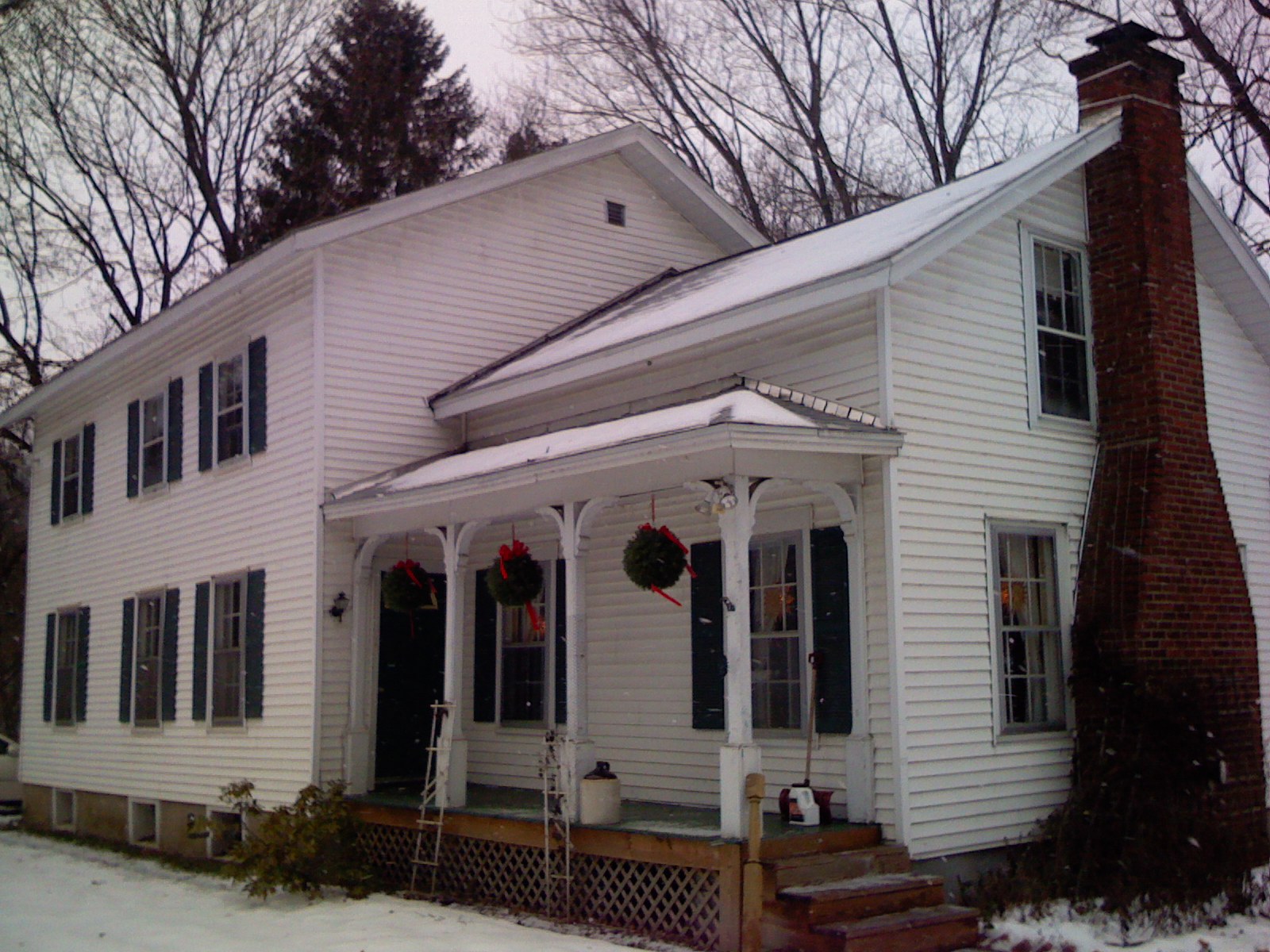
After the ballet matinée yesterday, I drove the 250 miles up to Utica, NY for a concert today with the New York Chamber Soloists. I was looking forward to the long drive. I had good weather, the GPS woman to tell me when to turn, and bunch of CDs to keep me company. After the concert today, I drive 100 miles west to Freeville to visit my friends Heidi and Rick. She plays in the Syracuse Symphony, he teaches at Ithaca College, and they have a charming 19th-century farmhouse between the two cities. There's a creek running through the back yard, a fire in the fire place and always wonderful food and music. The two of them have perfected life's quotidian pleasures. A day spent in their house has the effect of a week's vacation. Since the ballet doesn't need me next week, I may just stay an extra day.
Here's my driving playlist:
— Maria Rita "Segundo" 2005 (Warner Music Latina) Nothing like Brazilian music to fend off the cold.
— Clara Nunes, various sambas and songs burned for me by my friend Andre Faria
— Sviatoslav Richter "The Sofia Recital 1958" (Phonogram France)
— youssou n'dour "7 Seconds" 2004 (Sony) Recommended to me by a NYC taxi driver.
— Haydn Piano Trios, Nos 43, 44, and 45, played by Patrick Cohen, Erich Höbarth, Christophe Coin 2005 (harmonia mundi France) I'm spoiled, I can't listen to this repertoire on modern instruments anymore . . .
— Johan Heinrich Schmelzer Violin Sonatas 1996 (harmonia mundi France) Romanesca (Andrew Manze, Nigel North, John Toll)
— "Fanfare Ciocarlia" Baro Biao 2000 (Pirana Musik) My favorite driving music!
After the ballet matinée yesterday, I drove the 250 miles up to Utica, NY for a concert today with the New York Chamber Soloists. I was looking forward to the long drive. I had good weather, the GPS woman to tell me when to turn, and bunch of CDs to keep me company. After the concert today, I drive 100 miles west to Freeville to visit my friends Heidi and Rick. She plays in the Syracuse Symphony, he teaches at Ithaca College, and they have a charming 19th-century farmhouse between the two cities. There's a creek running through the back yard, a fire in the fire place and always wonderful food and music. The two of them have perfected life's quotidian pleasures. A day spent in their house has the effect of a week's vacation. Since the ballet doesn't need me next week, I may just stay an extra day.
Here's my driving playlist:
— Maria Rita "Segundo" 2005 (Warner Music Latina) Nothing like Brazilian music to fend off the cold.
— Clara Nunes, various sambas and songs burned for me by my friend Andre Faria
— Sviatoslav Richter "The Sofia Recital 1958" (Phonogram France)
— youssou n'dour "7 Seconds" 2004 (Sony) Recommended to me by a NYC taxi driver.
— Haydn Piano Trios, Nos 43, 44, and 45, played by Patrick Cohen, Erich Höbarth, Christophe Coin 2005 (harmonia mundi France) I'm spoiled, I can't listen to this repertoire on modern instruments anymore . . .
— Johan Heinrich Schmelzer Violin Sonatas 1996 (harmonia mundi France) Romanesca (Andrew Manze, Nigel North, John Toll)
— "Fanfare Ciocarlia" Baro Biao 2000 (Pirana Musik) My favorite driving music!
Wednesday, November 28, 2007
Peter and Jerry by Edward Albee
Second Stage Theater, NYC
A fascinating night at the theater was enhanced by a complete disagreement about the play at hand.
Tonight, two friends and I attended Albee's "Peter and Jerry" at Second Stage. The first act, "Homelife" (2004), a new prequel written to "The Zoo Story" (1959), was willfully mundane. I have to think the playwright, who can so devastatingly plum the depths of sordid familial strife, restrained his hand in "Homelife." Albee's blinding verbal pyrotechnics were hardly in view. How far we are from the extremes of "The Goat or Who is Sylvia?" In "Homelife" all the angst is muted in domestic pastels. The reoccurring props of the wife's dish towel, and the husband's "boring book" act as sponges, absorbing even the couple's most troubling personal revelations in limp familiarity. It was rather a relief knowing that when the husband decides to get some fresh air in the park, he will enter the world of "The Zoo Story." We needed some action.
Intermission's funniest line came from one of my friends, who, surveying the packed house of hip mid-week theatergoers, said, "There are too many communists here tonight."
The Baroque excesses of "The Zoo Story" thrilled me; they always have. I remember reading the play, mouth agape, in my hometown public library when I was 16. I read it again and again. Tonight, its resplendent bleakness (and the virtuoso performance of Dallas Roberts as the crazed Jerry) left me in tears. So it came as a shock when one of my companions, who had never seen the play, said he hated "The Zoo Story."
For me, the two characters that eventually mortally fight over one park bench, are but warring sides of one man unable to reconcile his dual Freudian natures. My friend disliked the use of the poor man's suffering as a utilitarian instrument for the enlightenment of the upper class. For him, it was as if the crazy man's suffering only had meaning—his pathos only a purpose—if observed and reacted to by the bourgeoisie. In his reading of the play, the poor man's plight is exploited for the learning of the rich. His reaction, literal and totally visceral, resulted for him in an awful stench.
The dual (duel?) catharsis of the play, which resulted in my tears and his recoiling, is difficult to reconcile. It brought to mind a dinner party last winter at the home of an art collector and an artist. In their living room, which is full of stunning art from antiquity to the contemporary, hangs an important work of Cy Twombly. That night, one guest said he liked every work of art in the room, save the Twombly, which he thought utter rubbish. Though he said he liked all the other works, the only one he spoke about all night was the one he disliked. And he spoke and spoke and spoke about it, in great detail, focused on every perceived flaw, every artistic failure. Our sophisticated host listened, his head cocked in characteristic interest, and finally he said that he loved the work and though he was sorry his guest didn't share his opinion, he was glad to have a work of art that elicited such a strong response.
Tonight after the play, there was a friendly quarrel on the corner of 43rd and Eighth Avenue. There is a thrill in knowing that one might just be dead wrong, and sublimity in knowing one will never know.
Second Stage Theater, NYC
A fascinating night at the theater was enhanced by a complete disagreement about the play at hand.
Tonight, two friends and I attended Albee's "Peter and Jerry" at Second Stage. The first act, "Homelife" (2004), a new prequel written to "The Zoo Story" (1959), was willfully mundane. I have to think the playwright, who can so devastatingly plum the depths of sordid familial strife, restrained his hand in "Homelife." Albee's blinding verbal pyrotechnics were hardly in view. How far we are from the extremes of "The Goat or Who is Sylvia?" In "Homelife" all the angst is muted in domestic pastels. The reoccurring props of the wife's dish towel, and the husband's "boring book" act as sponges, absorbing even the couple's most troubling personal revelations in limp familiarity. It was rather a relief knowing that when the husband decides to get some fresh air in the park, he will enter the world of "The Zoo Story." We needed some action.
Intermission's funniest line came from one of my friends, who, surveying the packed house of hip mid-week theatergoers, said, "There are too many communists here tonight."
The Baroque excesses of "The Zoo Story" thrilled me; they always have. I remember reading the play, mouth agape, in my hometown public library when I was 16. I read it again and again. Tonight, its resplendent bleakness (and the virtuoso performance of Dallas Roberts as the crazed Jerry) left me in tears. So it came as a shock when one of my companions, who had never seen the play, said he hated "The Zoo Story."
For me, the two characters that eventually mortally fight over one park bench, are but warring sides of one man unable to reconcile his dual Freudian natures. My friend disliked the use of the poor man's suffering as a utilitarian instrument for the enlightenment of the upper class. For him, it was as if the crazy man's suffering only had meaning—his pathos only a purpose—if observed and reacted to by the bourgeoisie. In his reading of the play, the poor man's plight is exploited for the learning of the rich. His reaction, literal and totally visceral, resulted for him in an awful stench.
The dual (duel?) catharsis of the play, which resulted in my tears and his recoiling, is difficult to reconcile. It brought to mind a dinner party last winter at the home of an art collector and an artist. In their living room, which is full of stunning art from antiquity to the contemporary, hangs an important work of Cy Twombly. That night, one guest said he liked every work of art in the room, save the Twombly, which he thought utter rubbish. Though he said he liked all the other works, the only one he spoke about all night was the one he disliked. And he spoke and spoke and spoke about it, in great detail, focused on every perceived flaw, every artistic failure. Our sophisticated host listened, his head cocked in characteristic interest, and finally he said that he loved the work and though he was sorry his guest didn't share his opinion, he was glad to have a work of art that elicited such a strong response.
Tonight after the play, there was a friendly quarrel on the corner of 43rd and Eighth Avenue. There is a thrill in knowing that one might just be dead wrong, and sublimity in knowing one will never know.
Let them eat candy!
This week The Orchestra of St. Luke's is playing a string of morning educational concerts for New York Public School students at the Apollo Theater in Harlem. (M11 to 125th, Bx15 to the theater, I'm there in 12 minutes.)
The response from the students is so enthusiastic, it's heartening. We start with the first movement of Beethoven 5 and after the opening call, there is an outcry from the audience each concert in anticipation and recognition. We play the Barber of Seville and the last movement of Mozart G-Minor before ending with Orpheus in the Underworld by Offenbach. The can-can receives screams and shouts and long applause. The students are then asked which of the four pieces they'd like to hear as an encore.
  There is a splattering of applause at the suggestions of Beethoven, Rossini, and Mozart, but the offer to play the Offenbach again elicits roars of approval! Who said kids don't like classical music?
And when it's this good, who could blame them for choosing candy?
This week The Orchestra of St. Luke's is playing a string of morning educational concerts for New York Public School students at the Apollo Theater in Harlem. (M11 to 125th, Bx15 to the theater, I'm there in 12 minutes.)
The response from the students is so enthusiastic, it's heartening.
 We start with the first movement of Beethoven 5 and after the opening call, there is an outcry from the audience each concert in anticipation and recognition. We play the Barber of Seville and the last movement of Mozart G-Minor before ending with Orpheus in the Underworld by Offenbach. The can-can receives screams and shouts and long applause. The students are then asked which of the four pieces they'd like to hear as an encore.
  There is a splattering of applause at the suggestions of Beethoven, Rossini, and Mozart, but the offer to play the Offenbach again elicits roars of approval! Who said kids don't like classical music?
And when it's this good, who could blame them for choosing candy?
Cymbeline
Bart Feller and I attended a performance of this uneven Shakespearian oddity at Lincoln Center last night. I thought of minor pieces by major composers; it comes from genius but does not arrive a masterpiece. Harold Bloom finds the work so full of the author's self-parody, as to defy genre. "Everything about Cymbeline is madly problematical, as Shakespeare, in a willful mood, evidently intended." He writes in "Shakespeare, the Invention of the Human."
In Act III, scene iii, Morgan tries to dissuade his two young male charges from their desire to move from the mountains where they live to seek their fortunes in the city.
"Did you but know the city's usuries,
And felt them knowingly: the art o' th' court,
As hard to leave as keep: whose top to climb
Is certain falling: or so slip'ry that
The fear's as bad as falling.
Nay, many times,
Doth ill deserve by doing well: what's worse,
Must court'sy at the censure."
Quite a different evocation of city life than Milton's youthful lines from L'Allegro:
"Towered cities please us then,
And the busy hum of men,
Where throngs of knights and barons hold,
In weeds of peace, high triumphs hold,
With store of ladies, whose bright eyes
Rain influence, and judge the prize
Of wit or arms, while both contend
To win her grace whom all commend.
Such sights as youthful poets dream
On summer eves by haunted stream."
Milton was young when he wrote these lines, Shakespeare, experienced in the ways of London politics when he wrote Morgan's speech.
Czesław Miłosz's 1991 poem Youth, brings to mind, through veils of experience, this draw of the city to the young and its disorientations. I remember very well arriving in Manhattan at age 23. The city's hum, its pleasures, its cruel usuries and political treachery, all yet to come.
YOUTH by Czesław Miłosz (1991)
Your unhappy and silly youth.
Your arrival from the provinces to the city.
Misted-over windowpanes of streetcars,
Restless misery of the crowd.
Your dread when you entered a place too expensive.
But everything was too expensive. Too high.
Those people must have noticed your crude manners,
Your outmoded clothes, and your awkwardness.
There were none who would stand by you and say,
You are a handsome boy,
you are strong and healthy,
Your misfortunes are imaginary.
You would not have envied a tenor in an overcoat of camel hair
Had you guessed his fear and known how he would die.
She, the red-haired, because of whom you suffered tortures,
So beautiful she seemed to you, is a doll in fire,
You don’t understand what she screams with her lips of a clown.
The shapes of hats, the cut of robes, faces in the mirrors,
You will remember unclearly like something from long ago
Or like what remains from a dream.
The house you approached trembling,
The apartment that dazzled you—
Look, on this spot the cranes clear the rubble.
In your turn you will have, possess, secure,
Able to be proud at last, when there is no reason.
Your wishes will be fulfilled, you will gape then
At the essence of time, woven of smoke and mist,
An iridescent fabric of lives that last one day,
Which rises and falls like an unchanging sea.
Books you have read will be of use no more.
You searched for an answer but lived without answer.
You will walk in the street of southern cities,
Restored to your beginnings, seeing again in rapture
The whiteness of a garden after the first night of snow.
And finally, from Cymbeline:
"Nay, do not wonder at it: you are made
Rather to wonder at the things you hear
Than to work any." (Posthumus, V.iii)
Bart Feller and I attended a performance of this uneven Shakespearian oddity at Lincoln Center last night. I thought of minor pieces by major composers; it comes from genius but does not arrive a masterpiece. Harold Bloom finds the work so full of the author's self-parody, as to defy genre. "Everything about Cymbeline is madly problematical, as Shakespeare, in a willful mood, evidently intended." He writes in "Shakespeare, the Invention of the Human."
In Act III, scene iii, Morgan tries to dissuade his two young male charges from their desire to move from the mountains where they live to seek their fortunes in the city.
"Did you but know the city's usuries,
And felt them knowingly: the art o' th' court,
As hard to leave as keep: whose top to climb
Is certain falling: or so slip'ry that
The fear's as bad as falling.
Nay, many times,
Doth ill deserve by doing well: what's worse,
Must court'sy at the censure."
Quite a different evocation of city life than Milton's youthful lines from L'Allegro:
"Towered cities please us then,
And the busy hum of men,
Where throngs of knights and barons hold,
In weeds of peace, high triumphs hold,
With store of ladies, whose bright eyes
Rain influence, and judge the prize
Of wit or arms, while both contend
To win her grace whom all commend.
Such sights as youthful poets dream
On summer eves by haunted stream."
Milton was young when he wrote these lines, Shakespeare, experienced in the ways of London politics when he wrote Morgan's speech.
Czesław Miłosz's 1991 poem Youth, brings to mind, through veils of experience, this draw of the city to the young and its disorientations. I remember very well arriving in Manhattan at age 23. The city's hum, its pleasures, its cruel usuries and political treachery, all yet to come.
YOUTH by Czesław Miłosz (1991)
Your unhappy and silly youth.
Your arrival from the provinces to the city.
Misted-over windowpanes of streetcars,
Restless misery of the crowd.
Your dread when you entered a place too expensive.
But everything was too expensive. Too high.
Those people must have noticed your crude manners,
Your outmoded clothes, and your awkwardness.
There were none who would stand by you and say,
You are a handsome boy,
you are strong and healthy,
Your misfortunes are imaginary.
You would not have envied a tenor in an overcoat of camel hair
Had you guessed his fear and known how he would die.
She, the red-haired, because of whom you suffered tortures,
So beautiful she seemed to you, is a doll in fire,
You don’t understand what she screams with her lips of a clown.
The shapes of hats, the cut of robes, faces in the mirrors,
You will remember unclearly like something from long ago
Or like what remains from a dream.
The house you approached trembling,
The apartment that dazzled you—
Look, on this spot the cranes clear the rubble.
In your turn you will have, possess, secure,
Able to be proud at last, when there is no reason.
Your wishes will be fulfilled, you will gape then
At the essence of time, woven of smoke and mist,
An iridescent fabric of lives that last one day,
Which rises and falls like an unchanging sea.
Books you have read will be of use no more.
You searched for an answer but lived without answer.
You will walk in the street of southern cities,
Restored to your beginnings, seeing again in rapture
The whiteness of a garden after the first night of snow.
And finally, from Cymbeline:
"Nay, do not wonder at it: you are made
Rather to wonder at the things you hear
Than to work any." (Posthumus, V.iii)
Saturday, November 24, 2007
Taking Note
Thank you so much, to Steve Smith for taking note.
And thank you to Patty of oboeinsight, too!
Thank you so much, to Steve Smith for taking note.
And thank you to Patty of oboeinsight, too!
Wednesday, November 21, 2007
Serendipity
After walking across the park from a lovely lunch with my friend, Joan Easton, I popped into to 67 Wines and Spirits to pick up something for tomorrow's Thanksgiving dinner at Pauline and Conrad's. (1998 Chateau Pichon Longueville, Comtesse de Lalande, Pauillac, and Piper-Heidsieck Rosé Sauvage.)
Walking out the store, I ran into Karathine Goeldner (It's become a pleasant, daily occurance . . . ), we exchanged a quick kiss for a happy Thanksgiving. No more than a few steps later, I ran into Bryn Terfel. I had attended the performance of Mendelssohn's Elijah Monday evening, with the Collegiate Chorale, Orchestra of St. Luke's, and soloists, including Mr. Terfel, conducted by Robert Bass in Carnegie Hall.
Terfel's performance of the Biblical prophet, like every one I've ever heard from him, left an indelible mark and desire for more. He brings to each role he undertakes a creative capacity larger than the task at hand. Even when faced with Verdi's (and Shakespeare's) Falstaff, there are no limits visible on the horizon of his work. Every risk, every opportunity, is met with generosity and artistry. Whether at the loudest or softest dynamic, the power and clarity of Terfel's words and music carried throughout the hall. (I should know, I was in the balcony.) He is a performing artist truly equal in creative power to our great composers.
"Beautiful performance Monday night, Mr. Terfel," I held out my hand. I identified a friend we have in common so I wouldn't seem like a run-of-the-mill-Upper-West-Side opera stalker. He sized me up and seemed unafraid, so we talked about Monday's concert Robert Bass, who was conducting for the first time in Carnegie Hall with his new heart. (Click here for an article in the Times about his recent medical trials and triumphs.) Terfel said what an extraordinary experience it was to sing this work with Robert Bass after all he had gone through. "All those uplifting words of Elijah, I sang them right to Bob."
The personal became the corporate, and the corporal transcended its usual bounds. I felt immense uplift after that concert. I know I am not alone, and I think I know why.
After walking across the park from a lovely lunch with my friend, Joan Easton, I popped into to 67 Wines and Spirits to pick up something for tomorrow's Thanksgiving dinner at Pauline and Conrad's. (1998 Chateau Pichon Longueville, Comtesse de Lalande, Pauillac, and Piper-Heidsieck Rosé Sauvage.)
Walking out the store, I ran into Karathine Goeldner (It's become a pleasant, daily occurance . . . ), we exchanged a quick kiss for a happy Thanksgiving. No more than a few steps later, I ran into Bryn Terfel. I had attended the performance of Mendelssohn's Elijah Monday evening, with the Collegiate Chorale, Orchestra of St. Luke's, and soloists, including Mr. Terfel, conducted by Robert Bass in Carnegie Hall.
Terfel's performance of the Biblical prophet, like every one I've ever heard from him, left an indelible mark and desire for more. He brings to each role he undertakes a creative capacity larger than the task at hand. Even when faced with Verdi's (and Shakespeare's) Falstaff, there are no limits visible on the horizon of his work. Every risk, every opportunity, is met with generosity and artistry. Whether at the loudest or softest dynamic, the power and clarity of Terfel's words and music carried throughout the hall. (I should know, I was in the balcony.) He is a performing artist truly equal in creative power to our great composers.
"Beautiful performance Monday night, Mr. Terfel," I held out my hand. I identified a friend we have in common so I wouldn't seem like a run-of-the-mill-Upper-West-Side opera stalker. He sized me up and seemed unafraid, so we talked about Monday's concert Robert Bass, who was conducting for the first time in Carnegie Hall with his new heart. (Click here for an article in the Times about his recent medical trials and triumphs.) Terfel said what an extraordinary experience it was to sing this work with Robert Bass after all he had gone through. "All those uplifting words of Elijah, I sang them right to Bob."
The personal became the corporate, and the corporal transcended its usual bounds. I felt immense uplift after that concert. I know I am not alone, and I think I know why.
Violinist, Jaap Schröder at Juilliard
It would seem that, finally, there are cracks in the wall "protecting" Juilliard students from learning about historical instruments and the performance practice of our canonical composers. Last night as part of Jane Gottlieb's doctoral lectures series, Jaap Schröder spoke for just over an hour in Juilliard's Morse Hall describing his nearly half-century exploration of period instruments and historical performance styles.
Those of us who admire Jaap and have followed his career, were familiar with his themes, but I think his ideas may have been quite revolutionary to the Juilliard students. Jaap, however, is utterly persuasive, his curiosity, enthusiasm, and dedication winning instant converts.
He began with a discussion of bows, gut strings, and violins set up for Baroque music, explaining that the historically correct instruments will teach you how to play them. They will show you what they need and what the music needs. Producing a fore-shortened Baroque bow, he wondered whether we would thought it possible to play the Bach solo sonatas with it. "It's what they used, back then, and I have learned to do it," he answered. "Think of the opening chord of the G-Minor Sonata. You must use a very slow bow and start the arpeggio on the beat. It makes an intense sound, not what we now think of as intense, but a Baroque intensity." His demonstration left no question.
Clarity of sound, natural instrumental resonance, pure intonation, and a rhetoric that fits the text (the printed score) led Jaap through a lifetime of exploration, from the Baroque through Pre-Classical, Classical, and now 19th-Century Music. With his new Icelandic String Quartet, his sights are set on Brahms, and especially the Bruckner Quintet.
He played recorded examples from his extensive discography during the second half of his talk. At one point, Jaap played a Schubert recording by a very famous modern string quartet to show contrasting stylistic approaches to the same piece. He was respectful of the work of these modern players, but in the context of performances we'd been listening to, their performance sounded distorted with vibrato, muddy in texture, and utterly the wrong sound for the music. It was as if they wore stage make-up to a dinner party. When Jaap played his own recording of the same work, the music spoke clearly, with intimate power and persuasion.
The Juilliard students' questions demonstrated how removed this kind of thinking is from their current training. "Is it OK to play the harpsichord in early Haydn?" Yes, it is. "Can we improvise and ornament in Mozart?" Yes, you may. "I notice in your recording of the Schubert 'Trout' quintet, there are not the usual balance problems between piano and strings. Is that because of the instruments you use?" In fact, using the correct instruments allows the music to speak in its most natural way. This last questioner had a follow-up question. Since there were no historical keyboards at Juilliard, how could a pianist learn to listen well enough to correct balance problems when playing on modern instruments, he wondered. "I think all pianists should regularly perform with singers," was Jaap's answer, "Listen to the text, learn to express the meaning of the words, learn to breath. I think that would be most helpful to you."
It would seem that, finally, there are cracks in the wall "protecting" Juilliard students from learning about historical instruments and the performance practice of our canonical composers. Last night as part of Jane Gottlieb's doctoral lectures series, Jaap Schröder spoke for just over an hour in Juilliard's Morse Hall describing his nearly half-century exploration of period instruments and historical performance styles.
Those of us who admire Jaap and have followed his career, were familiar with his themes, but I think his ideas may have been quite revolutionary to the Juilliard students. Jaap, however, is utterly persuasive, his curiosity, enthusiasm, and dedication winning instant converts.
He began with a discussion of bows, gut strings, and violins set up for Baroque music, explaining that the historically correct instruments will teach you how to play them. They will show you what they need and what the music needs. Producing a fore-shortened Baroque bow, he wondered whether we would thought it possible to play the Bach solo sonatas with it. "It's what they used, back then, and I have learned to do it," he answered. "Think of the opening chord of the G-Minor Sonata. You must use a very slow bow and start the arpeggio on the beat. It makes an intense sound, not what we now think of as intense, but a Baroque intensity." His demonstration left no question.
Clarity of sound, natural instrumental resonance, pure intonation, and a rhetoric that fits the text (the printed score) led Jaap through a lifetime of exploration, from the Baroque through Pre-Classical, Classical, and now 19th-Century Music. With his new Icelandic String Quartet, his sights are set on Brahms, and especially the Bruckner Quintet.
He played recorded examples from his extensive discography during the second half of his talk. At one point, Jaap played a Schubert recording by a very famous modern string quartet to show contrasting stylistic approaches to the same piece. He was respectful of the work of these modern players, but in the context of performances we'd been listening to, their performance sounded distorted with vibrato, muddy in texture, and utterly the wrong sound for the music. It was as if they wore stage make-up to a dinner party. When Jaap played his own recording of the same work, the music spoke clearly, with intimate power and persuasion.
The Juilliard students' questions demonstrated how removed this kind of thinking is from their current training. "Is it OK to play the harpsichord in early Haydn?" Yes, it is. "Can we improvise and ornament in Mozart?" Yes, you may. "I notice in your recording of the Schubert 'Trout' quintet, there are not the usual balance problems between piano and strings. Is that because of the instruments you use?" In fact, using the correct instruments allows the music to speak in its most natural way. This last questioner had a follow-up question. Since there were no historical keyboards at Juilliard, how could a pianist learn to listen well enough to correct balance problems when playing on modern instruments, he wondered. "I think all pianists should regularly perform with singers," was Jaap's answer, "Listen to the text, learn to express the meaning of the words, learn to breath. I think that would be most helpful to you."
Sunday, November 18, 2007
Vanessa by Samuel Barber
Playing solo English horn in the New York City Opera run of "Vanessa" by Samuel Barber has been an honor and a musical high point. I've known this rarity through recordings since I was a teenager; what a thrill to perform the work at Lincoln Center. The only sad note is that Albert Fuller, who loved the work and kept a piano-vocal score in his music library, didn't live to see the production.
Click here to read Anthony Tommasini's review in the New York Times.
Barber's score is richly orchestrated and he borrows liberally from good source material . . . Vanessa's innocent love music directly suggests passages from Stravinsky's Firebird both in melody and harmonization, as do many other passages throughout. The "Oedipus" music in Act I quotes the jazz standard "April in Paris." (Does this presage Anatola and Vanessa's trip to Paris at the end of the opera?) Richard Strauss, Puccini, Charles Ives, Mahler, Copland, Bernard Hermann, and Nelson Riddle are all frequent contributors to the feast Barber organized. Yet the derivative elements of the music weave together into an original musical tapestry, firmly set in its time, yet powerful and moving decades later. It pays to borrow from the best.
Lauren Flanigan, as Vanessa, chews the scenery in a searing account of self-blinded love. Katharine Goeldner's assured, nuanced account of Erika is one I will long remember. An intelligent artist at the height of her strength, when the music called for power, her clarion tone filled the hall with beautiful sound. Her quiet, heart-broken utterances reached out to the audience with generous intimacy.
During a post-performance dinner with friends at Jean-George, Katharine told the story of Rosalind Elias, who premiered and role of Erika and plays the Baroness in this production, demurely requesting Barber write Erika an aria. "Must Winter Come So Soon," is the haunting result. It could be a jazz standard, itself, (Audra, are you reading this?) and is the last moment of innocence before Anatol's greed-driven machinations ("Love Has a Bitter Core") forever changes the lives of Vanessa and Erika.
The run closed yesterday afternoon. When Katharine came out for her curtain call, rather than walking right to center stage to accept her enthusiastic applause, she went to Rosalind and brought her to center stage for special recognition. The applause swelled, the women embraced. Katharine turned to Richard Stilwell (who played the doctor) and swiped the handkerchief from his breast pocket to dry her tears. We all were reaching from hankies at this point. It was a great tribute.
Playing solo English horn in the New York City Opera run of "Vanessa" by Samuel Barber has been an honor and a musical high point. I've known this rarity through recordings since I was a teenager; what a thrill to perform the work at Lincoln Center. The only sad note is that Albert Fuller, who loved the work and kept a piano-vocal score in his music library, didn't live to see the production.
Click here to read Anthony Tommasini's review in the New York Times.
Barber's score is richly orchestrated and he borrows liberally from good source material . . . Vanessa's innocent love music directly suggests passages from Stravinsky's Firebird both in melody and harmonization, as do many other passages throughout. The "Oedipus" music in Act I quotes the jazz standard "April in Paris." (Does this presage Anatola and Vanessa's trip to Paris at the end of the opera?) Richard Strauss, Puccini, Charles Ives, Mahler, Copland, Bernard Hermann, and Nelson Riddle are all frequent contributors to the feast Barber organized. Yet the derivative elements of the music weave together into an original musical tapestry, firmly set in its time, yet powerful and moving decades later. It pays to borrow from the best.
Lauren Flanigan, as Vanessa, chews the scenery in a searing account of self-blinded love. Katharine Goeldner's assured, nuanced account of Erika is one I will long remember.
 An intelligent artist at the height of her strength, when the music called for power, her clarion tone filled the hall with beautiful sound. Her quiet, heart-broken utterances reached out to the audience with generous intimacy.
During a post-performance dinner with friends at Jean-George, Katharine told the story of Rosalind Elias, who premiered and role of Erika and plays the Baroness in this production, demurely requesting Barber write Erika an aria. "Must Winter Come So Soon," is the haunting result. It could be a jazz standard, itself, (Audra, are you reading this?) and is the last moment of innocence before Anatol's greed-driven machinations ("Love Has a Bitter Core") forever changes the lives of Vanessa and Erika.
The run closed yesterday afternoon. When Katharine came out for her curtain call, rather than walking right to center stage to accept her enthusiastic applause, she went to Rosalind and brought her to center stage for special recognition. The applause swelled, the women embraced. Katharine turned to Richard Stilwell (who played the doctor) and swiped the handkerchief from his breast pocket to dry her tears. We all were reaching from hankies at this point. It was a great tribute.
Tuesday, November 13, 2007
Remarks given at last night's Tribute Concert to Albert Fuller
Ladies and gentlemen, I am so pleased to see a full house tonight. My name is James Roe, I am the Artistic Director the of The Helicon Foundation, an organization Albert Fuller founded in 1985 to explore the use of period instruments in chamber music from the 17th, 18th, 19th, and early 20th centuries. Emailing last week with Albert’s long time friend, Frank Heller, he mentioned how much Albert would have loved this program; indeed he would have. All the performers tonight are ones he loved dearly and with whom he had long fruitful association and so we thank them for being a part of this tribute. While I’m thanking people, let me express gratitude to President Polisi and Juilliard for hosting this event. On the Helicon side, I have to thank Matthew Herren for his indispensable assistance in planning this event. I also thank Helicon Board Member Karen McLaughlin and her friends at Live from Lincoln Center for producing and editing the recording of Albert speaking and for making the DVD included in your program. On a personal note, everyone who loved Albert owes a deep gratitude to Patrick Rucker, who in the last year of Albert’s life, and especially during his final illness, provided him with care, comfort and dignity as he lived out his final days in his own home.
I met Albert Fuller in 1990 as a student in his Juilliard Graduate Seminar called “Performance Problems in 18th-Century Music.” Seventeen years and two months ago, fresh and green from northern Michigan farm country, I was sitting just upstairs in Karen Wagner’s office planning my course work. “Why don’t you take Albert Fuller’s class?” she said, “I think you’d enjoy it.” Well, Karen, I’d say that was a terrific suggestion . . .
Albert referred to his graduate seminar as his STYLE CLASS. Any of us who spent any time with Albert, knew that his very life was a class in style — and his style was in a class all by itself.
His course didn’t follow the usual or expected linear format—usual, expected, and linear were never his abiding interests—rather it wended its way, equal parts Socratic and rhapsodic, through issues important to him: the power of artistic self expression to unite humanity, the development of an individual voice, and the recognition of historical music’s vernacular power. This last point was a great motivator in his exploration of period instruments and performance practice, the stripping away of grimy layers of interpretive build-up on centuries-old music could reveal audacious power in the original. But he also approached this question from the completely opposite direction, through popular music. For Albert, the question of cultural relevance was uncomplicated by category. He was touched by Madonna and Monteverdi, The Beatles and Bach, Aretha was divine, “Elvis was the translator,” and all music basically came down to singing and dancing!
From time to time, Albert would ask me to proofread his new Seminar materials. One day he handed me a nearly blank piece of paper, “Jim, take a look at my new final exam.” There was only one printed line which read: “Question: What have you learned from this class during the year? (Use both sides only of this one piece of paper.)”
This fall, I found a file full of answers to his final exam from 1998. Reading them, I was struck at the intimate and touching picture they painted of Albert as a teacher. He inspired these young musicians. They really got him. I would like to read you some excerpts from their answers. I happen to know that at least two people in the audience today were members of this class, and I’m going to read from both of their exams, but I won’t reveal any names. Don’t worry; you both got “A”s. So, here they are:
I feel that today, musicians rely too heavily on technique. It seems that fast, clean playing with lots of vibrato is what we strive for. But from this class, I have confirmed in myself that music comes first and technique is only a tool. Now I try to think about how singers would sing phrase and I imitate that on the cello.
In this class, we learned the importance of what earlier artists had to say and how to pass on their message by making music alive in the way it was alive for those who heard it for the very first time.
We should keep in mind that the audience we face is not of the past, but of the present. You have to look not only to the past to find music’s fundamental meaning, but also you have to look inside yourself for your own interpretation, which must inevitably reflect the psyche of your age.
This year, you didn’t once say, “You must agree with this interpretation,” you said, “This moved me, does it move you?” I don’t want to make your class sound like a therapy session, but now that it’s over, I feel that was its effect on me. In the past, I would pick up a new piece and say, “Where’s the hardest lick?” Now I think, “WHY did the composer write this? And WHAT does it mean?” You got me to confront getting on stage and saying something outrageous, something dark, something much more wild than the audience expected. This class has made me want to stop being a student and starting being an artist.
I think this class should be required for all Juilliard students. Everyone knows about music history and theory, but so few musicians know about themselves.
Your coaching me in the Beethoven C Minor Violin Sonata was particularly memorable. As you worked with us, I realized that I had never been taught to truly respect or create a logical interpretation of the set of instructions written down by the composer. I have also learned that there is a great deal of good French music.
I grew up in communist China and was taught early on to think like everyone else and to play the violin like everyone else. But you told me to become the artist of my own life and listen to my own heart. When I walked out of Juilliard after your class, I felt the sun shining on my face for the first time in my life. Thank you, Mr. Fuller.
Ladies and gentlemen, I am so pleased to see a full house tonight. My name is James Roe, I am the Artistic Director the of The Helicon Foundation, an organization Albert Fuller founded in 1985 to explore the use of period instruments in chamber music from the 17th, 18th, 19th, and early 20th centuries. Emailing last week with Albert’s long time friend, Frank Heller, he mentioned how much Albert would have loved this program; indeed he would have. All the performers tonight are ones he loved dearly and with whom he had long fruitful association and so we thank them for being a part of this tribute. While I’m thanking people, let me express gratitude to President Polisi and Juilliard for hosting this event. On the Helicon side, I have to thank Matthew Herren for his indispensable assistance in planning this event. I also thank Helicon Board Member Karen McLaughlin and her friends at Live from Lincoln Center for producing and editing the recording of Albert speaking and for making the DVD included in your program. On a personal note, everyone who loved Albert owes a deep gratitude to Patrick Rucker, who in the last year of Albert’s life, and especially during his final illness, provided him with care, comfort and dignity as he lived out his final days in his own home.
I met Albert Fuller in 1990 as a student in his Juilliard Graduate Seminar called “Performance Problems in 18th-Century Music.” Seventeen years and two months ago, fresh and green from northern Michigan farm country, I was sitting just upstairs in Karen Wagner’s office planning my course work. “Why don’t you take Albert Fuller’s class?” she said, “I think you’d enjoy it.” Well, Karen, I’d say that was a terrific suggestion . . .
Albert referred to his graduate seminar as his STYLE CLASS. Any of us who spent any time with Albert, knew that his very life was a class in style — and his style was in a class all by itself.
His course didn’t follow the usual or expected linear format—usual, expected, and linear were never his abiding interests—rather it wended its way, equal parts Socratic and rhapsodic, through issues important to him: the power of artistic self expression to unite humanity, the development of an individual voice, and the recognition of historical music’s vernacular power. This last point was a great motivator in his exploration of period instruments and performance practice, the stripping away of grimy layers of interpretive build-up on centuries-old music could reveal audacious power in the original. But he also approached this question from the completely opposite direction, through popular music. For Albert, the question of cultural relevance was uncomplicated by category. He was touched by Madonna and Monteverdi, The Beatles and Bach, Aretha was divine, “Elvis was the translator,” and all music basically came down to singing and dancing!
From time to time, Albert would ask me to proofread his new Seminar materials. One day he handed me a nearly blank piece of paper, “Jim, take a look at my new final exam.” There was only one printed line which read: “Question: What have you learned from this class during the year? (Use both sides only of this one piece of paper.)”
This fall, I found a file full of answers to his final exam from 1998. Reading them, I was struck at the intimate and touching picture they painted of Albert as a teacher. He inspired these young musicians. They really got him. I would like to read you some excerpts from their answers. I happen to know that at least two people in the audience today were members of this class, and I’m going to read from both of their exams, but I won’t reveal any names. Don’t worry; you both got “A”s. So, here they are:
_
I feel that today, musicians rely too heavily on technique. It seems that fast, clean playing with lots of vibrato is what we strive for. But from this class, I have confirmed in myself that music comes first and technique is only a tool. Now I try to think about how singers would sing phrase and I imitate that on the cello.
_
In this class, we learned the importance of what earlier artists had to say and how to pass on their message by making music alive in the way it was alive for those who heard it for the very first time.
_
We should keep in mind that the audience we face is not of the past, but of the present. You have to look not only to the past to find music’s fundamental meaning, but also you have to look inside yourself for your own interpretation, which must inevitably reflect the psyche of your age.
_
This year, you didn’t once say, “You must agree with this interpretation,” you said, “This moved me, does it move you?” I don’t want to make your class sound like a therapy session, but now that it’s over, I feel that was its effect on me. In the past, I would pick up a new piece and say, “Where’s the hardest lick?” Now I think, “WHY did the composer write this? And WHAT does it mean?” You got me to confront getting on stage and saying something outrageous, something dark, something much more wild than the audience expected. This class has made me want to stop being a student and starting being an artist.
_
I think this class should be required for all Juilliard students. Everyone knows about music history and theory, but so few musicians know about themselves.
_
Your coaching me in the Beethoven C Minor Violin Sonata was particularly memorable. As you worked with us, I realized that I had never been taught to truly respect or create a logical interpretation of the set of instructions written down by the composer. I have also learned that there is a great deal of good French music.
_
I grew up in communist China and was taught early on to think like everyone else and to play the violin like everyone else. But you told me to become the artist of my own life and listen to my own heart. When I walked out of Juilliard after your class, I felt the sun shining on my face for the first time in my life. Thank you, Mr. Fuller.
_
All of this, of course, begs the question: what did you and I learn from Albert’s class and from his style? As we grapple with this question over the course of the next months and years, channel the Positive Bar: don’t give much heed to self-doubt, do not censor yourself, remember, fantasy precedes fact and your most precious possession is your own creativity.
The work and the joy of remembering Albert begins now. We’re all charged with it, and I can think of no better group of people to undertake it. I hope the champagne at the reception in a few minutes will charge up a bunch Albert stories. I have one would like to leave you with you that best describes what I learned from his class.
During my first years with Helicon in the early 1990s, Carnegie Hall presented us in a series called, Vintage Originals. Before one of these concerts, Albert gave a preamble that he ended by reciting the opening seven lines of the poem, “Peter Quince at the Clavier” by Wallace Stevens. The New York Times critic (I will refrain from naming him) complained in the paper the next day that Mr. Fuller had spoken of personal matters rather than technical. Therein is Albert’s lesson: technique is itself meaningless without something personal to say.
Here are the lines of Wallace Stevens that Albert so loved:
Just as my fingers on these keys
Make music, so the self-same sounds
On my spirit make a music, too.
Music is feeling, then, not sound;
And thus it is that what I feel,
Here in this room, desiring you,
Thinking of your blue-shadowed silk,
Is music.
Friday, November 09, 2007
Program for the Albert Fuller Concert Tribute
Monday • 12 Nov 2007 • 6 PM
Paul Hall • The Juilliard School • 144 West 66th Street
To attend, RSVP to (212) 799-5000 x 329
A TRIBUTE TO ALBERT FULLER (1926-2007)
Monday, 12 November 2007 at 6:00 PM
Paul Recital Hall, The Juilliard School, New York City
Joseph W. Polisi, President
Handel Trio Sonata in G Minor, HWV 404
Aulos Ensemble
Marc Schachman, oboe
Linda Quan, violin
Myron Lutzke, cello
Arthur Haas, harpsichord
F. Couperin Ténébreuse
Rameau Entretien des Muses
Le Roux Preluce and Chaccone
Andrew Appel, harpsichord
Recording of Ablert Fuller’s remarks
at the First Helicon Symposium
20 October 1985
Matteis Fantasia in C Minor for Solo Violin
Jaap Schroeder, violin
D. Scarlatti Sonata K. 208 in A Major and K. 545 in B-flat Major
Lionel Party, harpsichord
Purcell Music for a While
Schubert Frühlingsglaube
Murray I’ll Walk Beside You
Robert White, tenor
Aymeric Dupré la Tour, harpsichord
Jonathan Ware, piano
James Roe, Artistic Director
The Helicon Foundation
Schumann Kreisleriana, Op. 16, No. 2
Pedja Muzijevic, piano
Recording of Albert Fuller playing Bach’s Bist du bei mir
Monday • 12 Nov 2007 • 6 PM
Paul Hall • The Juilliard School • 144 West 66th Street
To attend, RSVP to (212) 799-5000 x 329
A TRIBUTE TO ALBERT FULLER (1926-2007)
Monday, 12 November 2007 at 6:00 PM
Paul Recital Hall, The Juilliard School, New York City
Joseph W. Polisi, President
Handel Trio Sonata in G Minor, HWV 404
Aulos Ensemble
Marc Schachman, oboe
Linda Quan, violin
Myron Lutzke, cello
Arthur Haas, harpsichord
F. Couperin Ténébreuse
Rameau Entretien des Muses
Le Roux Preluce and Chaccone
Andrew Appel, harpsichord
Recording of Ablert Fuller’s remarks
at the First Helicon Symposium
20 October 1985
Matteis Fantasia in C Minor for Solo Violin
Jaap Schroeder, violin
D. Scarlatti Sonata K. 208 in A Major and K. 545 in B-flat Major
Lionel Party, harpsichord
Purcell Music for a While
Schubert Frühlingsglaube
Murray I’ll Walk Beside You
Robert White, tenor
Aymeric Dupré la Tour, harpsichord
Jonathan Ware, piano
James Roe, Artistic Director
The Helicon Foundation
Schumann Kreisleriana, Op. 16, No. 2
Pedja Muzijevic, piano
Recording of Albert Fuller playing Bach’s Bist du bei mir
Monday, November 05, 2007
For the I-can't-work-under-these-conditions file.
Tonight, the Orchestra of St. Luke's performed at the New York Public Library's Tenth Annual Literary Lions Awards. A tony affair, stars of every stripe, draped in ermine and pearls, filled the decked out (and already splendid) reading room. Before the event, a young man had been assigned to walk through the whole place spritzing pine cone scented air perfume. Armed with a two-way radio head set like a manager at Banana Republic and a spritzer, methodically he minced, spritzing with every foot fall. Right mince spritz, left mince spritz, right mince spritz, left mince spritz . . . "oops, sorry, did I spritz ya'?" . . . for an hour, at least! (I don't know when he started, he was in full-spritz when I arrived, and I was early.) Well, I have come to learn that I am powerfully allergic to artificially-flavored pine cone scented spritz. Now home from the event, everything inside my head is inflamed. I feel like I've been drinking perfume.
"What and give up show biz?" (Some of you know the joke from which the punch line comes.)
Tonight, the Orchestra of St. Luke's performed at the New York Public Library's Tenth Annual Literary Lions Awards. A tony affair, stars of every stripe, draped in ermine and pearls, filled the decked out (and already splendid) reading room. Before the event, a young man had been assigned to walk through the whole place spritzing pine cone scented air perfume. Armed with a two-way radio head set like a manager at Banana Republic and a spritzer, methodically he minced, spritzing with every foot fall. Right mince spritz, left mince spritz, right mince spritz, left mince spritz . . . "oops, sorry, did I spritz ya'?" . . . for an hour, at least! (I don't know when he started, he was in full-spritz when I arrived, and I was early.) Well, I have come to learn that I am powerfully allergic to artificially-flavored pine cone scented spritz. Now home from the event, everything inside my head is inflamed. I feel like I've been drinking perfume.
"What and give up show biz?" (Some of you know the joke from which the punch line comes.)
Subscribe to:
Posts (Atom)